














When the federal government shut down earlier this fall, one of the first programs affected was the Supplemental Nutrition Assistance Program (SNAP). The shutdown, which has now resolved, paused benefits nationwide because Congress had not passed a new federal budget.
SNAP supports about 41 million low-income Americans, including 4,884 residents of Caledonia County. Losing even a month of benefits caused fear, frustration, and uncertainty for many families who rely on the program to buy groceries. On average, a single person receives about $298 per month in SNAP support, though the amount varies by household size and income. For many Vermonters, especially those who are unhoused, unemployed, or food insecure, these benefits are essential.
Federal SNAP Program
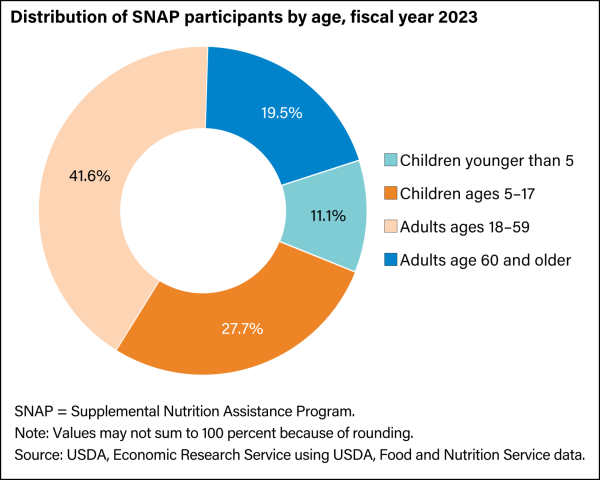
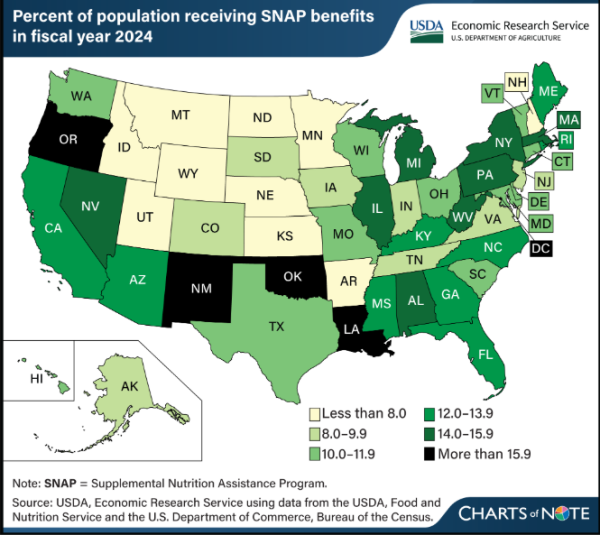
Once known as food stamps, SNAP is the most important hunger fighting program in the nation, and for many families it has been the difference between eating dinner or going to bed hungry. SNAP has helped countless families afford healthy food by using electronic benefit transfers (EBT), a government issued card with monthly deposits from federal funds. In Vermont, 1 in 10 people rely on SNAP benefits; recipients include low-income families, people with disabilities, elderly adults, and children. To determine eligibility and benefit amounts, the government looks at income, household size, and financial resources. States then distribute the federally funded benefits electronically each month.
After the government shutdown on October 1, 2025, roughly 66,500 Vermonters were left unsure how they would put food on the table. With federal support interrupted, many families immediately turned to local food banks, school meal programs, church pantries, and community organizations for help. In Vermont’s rural regions, where grocery access is limited and transportation can be a challenge, the sudden halt in SNAP processing caused particular strain.
History of SNAP
The Supplemental Nutrition Assistance Program (SNAP) has a long history of evolving to meet the needs of American families. It began in 1939 as the Food Stamp Program, created during the Great Depression when many Americans struggled to afford basic food. Although it was not meant to be permanent, the idea proved valuable.
In 1961, a permanent version was proposed, and in 1964 President Lyndon B. Johnson officially established the modern Food Stamp Program as part of his War on Poverty. Participation grew rapidly: from 1.1 million people in 1966 to 15 million by 1974, when the program became national. A major modernization came with the switch to EBT cards, first tested in 1984 and fully replacing paper food stamps by 2004. This change made benefits more secure, easier to use, and reduced fraud.
How the Shutdown Disrupted Benefits
The government shutdown began on October 1, 2025, leaving 66,500 Vermonters unsure how they would afford food. Nationally, the monthly cost of issuing full SNAP benefits is about $8 billion. To prevent a complete lapse in assistance, the federal government pulled approximately $5 billion from the USDA’s contingency fund, allowing states to issue only partial benefits while the shutdown continued. This stopgap measure offered some relief, but many households still received far less than they rely on. As a result, many Vermont families turned to local food shelves, community meal programs, public schools, friendly neighbors, places of worship, and emergency state support.
Vermont’s Emergency Response:
When SNAP benefits were “on hold” during the 43-day shutdown, Vermont took steps to help families bridge the gap. On November 7, Governor Phil Scott’s Press Secretary Amanda Wheeler shared with BNN staffer Danny Gelsleichter that “There are over 63,000 Vermonters who rely on SNAP benefits,” she noted, but added that the state approved a “$250,000 appropriation to the Vermont Foodbank, which was then distributed to local food shelves to purchase food in local communities for those in need.”
Wheeler shared that “the program is not cheap; it costs about $13 million per month – something the state cannot sustain long-term in the absence of federal funding.”
Who Was Most Affected?:
The SNAP cuts hit the most vulnerable Vermonters: 19,829 children, 12,274 adults under 60 with disabilities, and 16,896 elderly residents. These households already struggled to afford rent, heat, transportation, and food.
Research shows that SNAP reduces poverty and improves health, especially for children, while cuts increase food insecurity. Rural communities feel the impact even more, since groceries cost more and many towns lack easily accessible grocery stores. With unemployment around 2.5%, many families were unable to stretch their budgets far enough when benefits stopped.
How Our Local Community Responded to the SNAP Cuts:
At Blue Mountain Union, supporting families is always a priority, but during the government shutdown, it became even more important. It is worth noting that about 75% of BMU students qualify for free or reduced lunch. This rate reflects the high number of families who rely on federal assistance programs like SNAP. While SNAP helps families buy groceries at home, the free and reduced lunch program ensures that students receive nutritious meals during the school day.
When SNAP benefits were paused, many families lost part of their food budget, making school meals one of the most dependable sources of nutrition for children. According to Food Service Director Paul Pellegrino, “all kids get school lunch and breakfast for free.” Elementary students in the After School Program also receive snacks provided by the cafeteria. While BMU’s lunch program is doing a great deal to help, some families have raised concerns about whether students are receiving enough nutrition each day, since they may not be receiving enough at home.
Pellegrino explained that there would be “no change to the amount of nutrition served. All nutrition guidelines are set and pre-determined by a federal and state system.” Although the school cannot increase portion sizes or change the nutritional requirements, Pellegrino shared that they “send extra food [left over from meals] to shelters,” which offers additional support to the community as families deal with the loss of SNAP benefits.
Student Council Community Efforts:
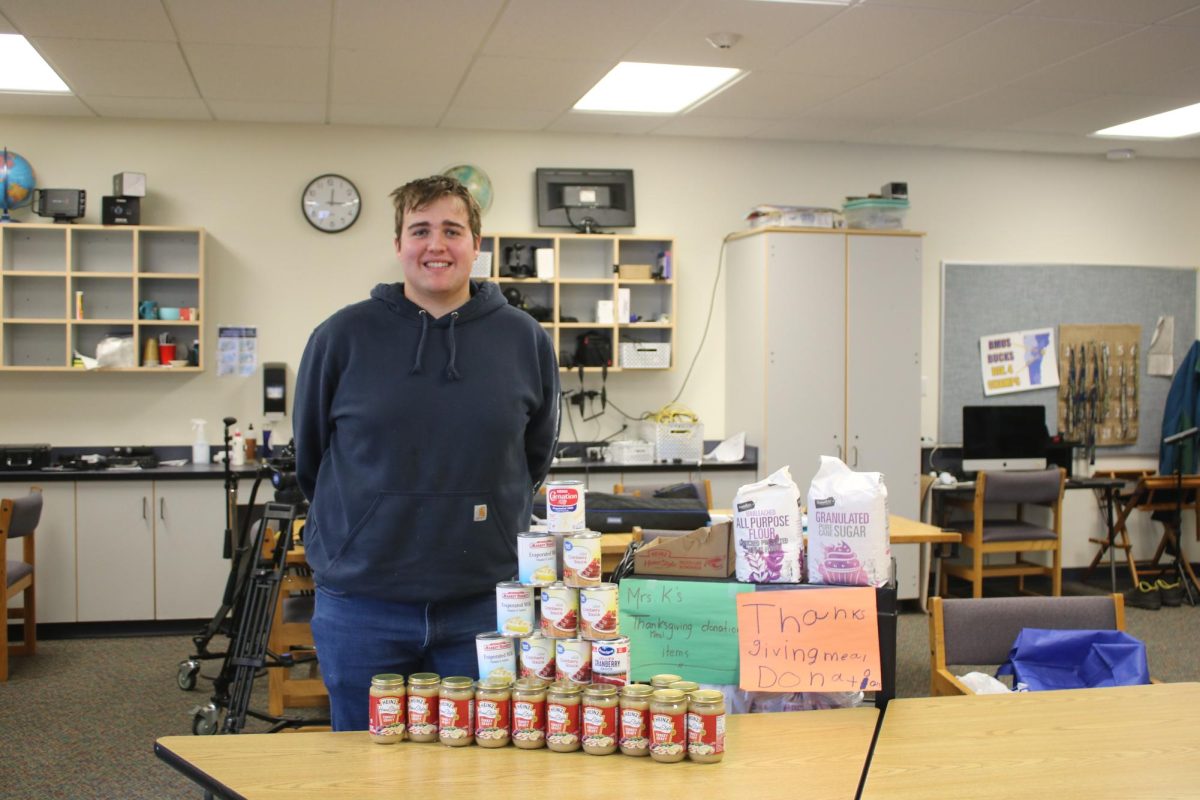
In an effort to help feed the community, Student Council leads two major food-support traditions each year. As Thanksgiving approaches, students assemble 5 to10 full Thanksgiving baskets for local families. According to Student Council advisor Michelle Khalins, “the turkeys and other food for the dinners are donated by the BMU staff, community members, and businesses.”
Each year, the Student Council also runs a school-wide food drive. It’s held as a friendly competition between classes to see who can bring in the most non-perishable items, and the rivalry helps collect a large amount of food.
All additional donations from the food drive are brought to the Groton Food Shelf, the closest food shelf to BMU. The Groton Food Shelf provides free access to food, playing a vital role in supporting local families.
Local Food Shelves Step In:
Local food shelves and businesses have also been helping distribute items to families in our area when families lost SNAP benefits. Jody Wohlleb of the Re-Treasured Community Closet has been helping families in and outside the OESU district. She shared, “Re-Treasured Community Closet has seen more visitors at our Food Shelf, including people from Groton/Ryegate, Wells River, Woodsville, and North Haverhill.”
She shared that this rise is likely due to reduced SNAP benefits and limited local food accessibility since some towns lack a food shelf or offer restricted hours. However, members of the community stepped up to ensure that families received the support that they need. Wohlleb explained, “although more people are seeking food donations, monetary support has increased. The community ensures a weekly hot meal, and volunteers contribute baked beans and homemade breads. We are working closely with other programs to keep our shelves, freezers, and refrigerators stocked.”
She added that they “provide free clothing, shoes, bedding, winter gear, household goods, food, and hygiene items, serving more people each week, and that they are committed to “making our shop welcoming and stigma-free for all. No matter the government’s status, we continue supporting our community’s needs.”
Carrie Peters, the Groton Town Clerk, also helps with the Groton Community Food Shelf. She explained, “there has been a slight increase in food. Families have come twice in a row and sooner than normal, because of no benefits.”
Upper Valley Food Programs:
And it’s not just BMU or Groton responding. Across the Upper Valley, communities are working together to make sure no one goes without food. Several local programs continue to offer consistent support to families affected by the shutdown.The Good Shepherd Ecumenical Food Pantry in Woodsville is open four days a week and serves residents of Haverhill, Benton, Orford, Piermont, Warren, Woodstock, Wentworth, Bath, Landaff, Lisbon, Lyman, and Monroe. The United Congregational Church in Orford also offers free produce every Tuesday afternoon through partnerships with Willing Hands and Orford Cares.
In addition to these larger programs, Bradford and other towns in the Upper Valley now have small “24/7 little food shelves” where anyone can take or leave items at any time. These community-run shelves operate on trust and generosity, offering canned goods, pasta, hygiene items, and other essentials. For families facing sudden gaps in support, these small neighborhood shelves have become an important, round-the-clock resource.
Families Helping Families – Lasagna Love:
With SNAP benefits uncertain, many families are turning to alternative sources for support, and helping each other. One growing option is Lasagna Love, a volunteer-based organization that began during the Covid pandemic to assist people who are food insecure, ill, or recovering from injury. Founded by Rhiannon Menn of San Diego, the project started as a small local effort and quickly expanded into a nationwide network of volunteers.
How does it work? Lasagna Love relies entirely on volunteers. When a person, or someone on their behalf, requests a meal, a volunteer receives the request and buys the ingredients. The volunteer then contacts the family, prepares a homemade lasagna, and delivers it directly to their home.
This simple system allows volunteers to support neighbors in a personal and meaningful way, providing comfort and a warm meal during challenging times. For more information on helping or receiving from Lasagna Love, click here: https://lasagnalove.org/
Moving Forward:
Now that the government has reopened, SNAP benefits are secured through September 2026, but the effects of the shutdown will linger for many households. The crisis highlighted how deeply families depend on reliable food support and how quickly local organizations must respond when federal aid is interrupted. As communities continue providing meals, donations, and 24/7 food shelf access, this moment serves as a reminder that food insecurity remains a year-round issue, and one that requires awareness and continued community involvement.
If you’re able to help, Blue Mountain Union is accepting food donations through December for our annual food drive. Non-perishable food items are appreciated and directly support students and families in our community.